


A leisure property refurbishment can enhance operational efficiency, customer experience and the potential returns you generate as a landlord or owner-occupier. But not all renovations and redesigns are equal in terms of their impact or the cost-effectiveness of the improvements they deliver.
With that in mind, we’re going to explore the key commercial leisure renovation considerations to ensure your investment delivers maximum value and appeal. That includes everything from budget planning and the various design elements to sustainability and mechanical and electrical upgrades.
Commercial leisure renovation considerations
Budget
Refurbishing an older leisure venue or preparing it for a change of use is generally a high-budget project that will require a substantial initial investment. Given the cost, it’s beneficial to keep the project's planning and construction stages as short as possible. That lets you get up and running quickly so you can start recouping some of that investment.
The seasonality of some venues can provide the perfect window for leisure property refurbishments. For example, most sports have an off-season, and entertainment venues, such as cinemas and soft play centres, will have periods of reduced footfall. You have to consider whether to close the venue or have a phased project that will take longer to complete but may not require closure.
Generally speaking, there are three ways to improve your leisure facility, with the right option for you determined by your priorities and budget:
- Renovate - Commercial leisure renovation allows you to repurpose spaces to offer new or expanded offerings and deliver meaningful change. It usually involves significant alterations to the space's function and use, with minimal changes to the building envelope (walls, roof windows, and doors). Renovations are more invasive and expensive than refurbishments.
- Refurbish - Leisure property refurbishment is more focused on improving what’s already there. You upgrade and modernise the facility by updating the fixtures, fittings, equipment and decoration, without making significant changes to the space's function. This is a good fit if your budget is limited or you have a dated or worn facility that needs a refresh.
- Expand - If you want to make your facility bigger and do not have existing square footage you can repurpose, the only option is to add to what you have. Expansion typically involves building new structures or extensions. It can be costly, depending on the scale, planning permissions and site conditions, and is often more expensive than renovation, particularly if significant groundwork or structural changes are required.
Design
When it comes to your leisure property refurbishment or renovation design, there’s plenty to consider. As leisure buildings are usually large and feature diverse spaces with different requirements, you’ll typically benefit from a bespoke design that meets the specific needs of you and your customers.
Leisure facilities are also subject to heavy footfall and high levels of wear and tear, so always choose high-quality, hardwearing materials that align with the space's usage and your aesthetic goals.
Essential design considerations include:
Crowd circulation
Venues that attract large crowds should be designed to facilitate easy and safe circulation, particularly during peak times. A space and traffic analysis can help you understand how visitors use the space. You can then design the layout to support them.
Heating and ventilation control
Splitting larger buildings into heating and ventilation zones based on their use and occupancy can increase energy efficiency, improve comfort and reduce costs.
Acoustics
Noise levels are another factor that requires careful consideration during the design phase. Customers will have expectations around sound quality in certain areas, but this sound should not reduce the usability or comfort of other users.
Lighting design
The clever use of lighting enhances the atmosphere and functionality of different areas, from bright, energising spaces such as gyms and pool halls to calm, ambient zones like spas or lounges. By combining thoughtful design with energy-efficient LED systems and smart lighting controls, you can create the right mood while also reducing long-term running costs.
Accessibility and inclusivity
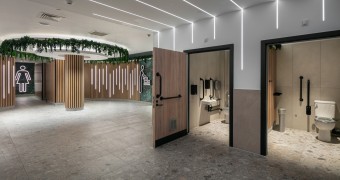
Modern leisure spaces must be inclusive for all users, incorporating features such as step-free access, accessible changing and shower facilities, clear wayfinding and sensory-friendly design where appropriate.
Health and safety
The complexity of many leisure buildings, their heavy use and the presence of high-risk areas, such as swimming pools, climbing walls and changing rooms, make health and safety a critical consideration during the design phase.
Layouts should prioritise safe movement through wet and dry areas, effective lighting, appropriate non-slip surfaces and compliance with all the relevant building and fire safety regulations.
Sustainability
Building sustainability is increasingly becoming a primary or secondary driver for commercial leisure renovation projects. Leisure facilities such as health clubs, swimming pools, and leisure centres are among the most energy- and water-intensive building types.
Other venues, like cinemas and entertainment centres, often have large, high-ceilinged spaces with limited natural light and extended operating hours, all of which contribute to substantial heating, cooling, and lighting demands.
There are also the Minimum Energy Efficiency Standards (MEES) Regulations to consider, which require commercial property to have a minimum Energy Performance Certificate (EPC) rating of E to be let. Sector analysis suggests this could be lowered to a C or B rating by 2030.
Sustainability measures you can implement during a commercial leisure renovation include:
- Increasing levels of fabric thermal insulation
- Increasing the levels of glazing
- Naturally ventilating sports halls and gyms where possible
- Using heat recovery systems to reclaim thermal energy from the air leaving leisure venues
- Using natural or LED lighting and installing lighting automation systems
- Investing in pool covers to reduce heat loss
- Implementing clean and on-site energy generation methods
Mechanical and electrical systems
Mechanical and electrical (M&E) systems are the backbone of any modern leisure facility, supporting heating, ventilation, lighting, water and safety operations. During refurbishment, it’s essential to assess the condition and capacity of existing systems to determine whether upgrades or replacements are needed.
Integrating energy-efficient HVAC systems, LED lighting and smart building controls can significantly reduce running costs and improve user comfort. It can also futureproof your facility by ensuring systems can accommodate new technologies, such as renewable energy integration and digital booking or monitoring platforms.
Take your leisure space to the next level
At Eddisons, we offer refurbishment and fit-out services in the leisure sector to prepare a new facility or refresh what you already have. From feasibility studies and architectural design to space planning and project management, our experts ensure every refurbishment or renovation adds real value, improves efficiency and enhances the customer experience.
Find out more about our leisure property services and get in touch to discuss your commercial property improvement goals with our team.
Get in touch with the BTG Eddisons team
Please contact us for more details and information.