


07/10/2025
Building consultancyKey takeaways
- Heritage and modernisation are not mutually exclusive, and the role of the building surveyor is to hold both in balance, not choose between them.
- There is currently no clear national framework to guide professionals through heritage modernisation projects, leaving outcomes heavily dependent on the individuals involved.
- The risk of inaction is real. Buildings that cannot be viably upgraded face redundancy, with significant environmental and social consequences
- Innovative technologies, including reversible interventions, 3D scanning, and breathable insulation, are expanding what is possible without compromising historic significance.
How can we modernise and upgrade older buildings while maintaining their heritage and character? It is a question that sits at the heart of building surveying as a profession, and one that the building consultancy team at BTG Eddisons recently explored in a roundtable discussion.
What emerged was a clear picture of an ongoing challenge; one that requires careful judgement, bespoke approaches, and, we believe, significantly clearer national guidance than currently exists.
The balancing act: Character versus function
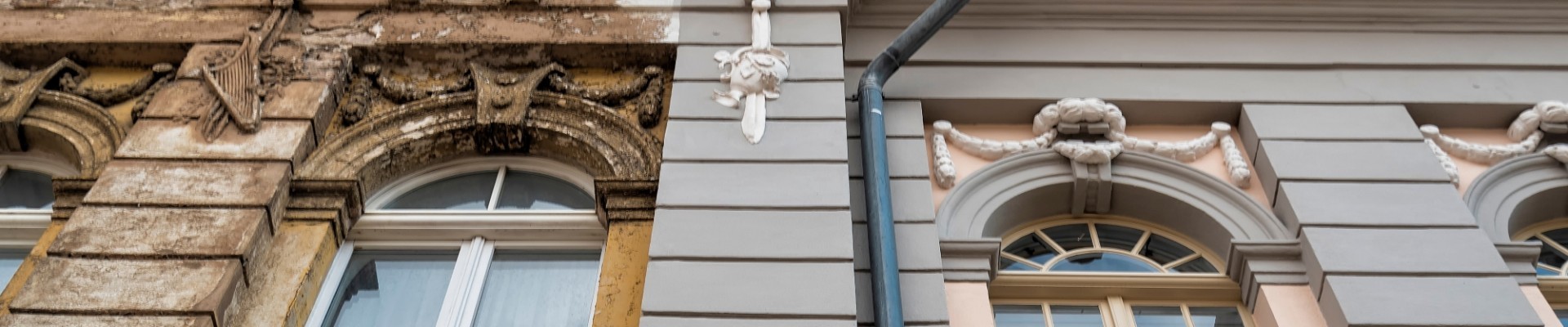
As building surveyors, we are advocates for protecting the history embedded in our built environment. Older buildings provide communities with a sense of identity and continuity that is difficult to replicate. Yet without modernisation, they can quickly fall short of contemporary requirements, whether that is thermal efficiency, accessibility, or compliance with current health and safety standards.
This is where tension arises. Clients, building regulations officers, and planning authorities often hold different and sometimes conflicting perspectives.
- Clients tend to prioritise usability and cost-effectiveness.
- Regulators are tasked with ensuring compliance.
- Planning officers focus on preserving historical integrity.
These competing objectives frequently lead to delays, disputes, and complex negotiations that can test even the most experienced professional teams.
Understanding the structural and regulatory context of any heritage building is where building surveys and planning and feasibility advice are most valuable. Establishing clearly what a building contains, what condition it is in, and what the constraints on intervention actually are before any design work begins.
The policy gap
There is currently no clear, standardised framework to guide professionals through heritage modernisation situations. Heritage and planning policy exist, but much is left open to subjective interpretation. For surveyors, this means every project requires a bespoke approach, with outcomes varying not only by building but by the individuals involved in the decision-making process.
This lack of clarity is compounded by underfunding within the planning system. Local authorities are often stretched thin, which limits the time and resources available for the collaborative conversations these projects genuinely require. The result can be frustrated clients, stalled projects, and, in some cases, buildings at risk of falling into disuse altogether.
Our insight on what is a listed building provides a useful introduction to the consents and constraints that apply to protected structures. This is a good starting point for owners and occupiers who are unfamiliar with the regulatory environment they are working within.
The risk of redundancy
If upgrading heritage buildings becomes too complex or too costly, there is a genuine danger that many will fall into disuse. This would represent a significant missed opportunity, both environmentally and socially.
From an environmental perspective, reusing existing buildings aligns directly with the UK's sustainability goals. The built environment contributes around 25 per cent of the UK's carbon emissions. Demolishing and rebuilding generate substantial embodied carbon, while retrofitting existing stock can substantially reduce emissions while extending the useful life of the building. The case for repair and reuse over demolition and rebuild is, in most circumstances, environmentally compelling.
Socially, heritage buildings often anchor communities. When these spaces become vacant, it can erode local identity and contribute to wider urban decline. Finding workable solutions for modernising such properties matters not just for the buildings themselves but for the communities they serve.
Innovation and technology
The good news is that innovative technologies and techniques are expanding what is achievable without compromising historic significance.
- Reversible interventions, such as secondary glazing or internal insulation systems that preserve historic facades while improving energy performance, allow meaningful upgrades without permanent alteration to original fabric.
- Three-dimensional scanning and digital modelling can document and plan upgrades with minimal physical intervention.
- Material innovations, including breathable insulation products designed specifically for older masonry, are making it possible to improve thermal performance without trapping moisture in historic walls.
These approaches are not without their own debates. Is reinstating a heritage element with a modern replica genuine conservation? Does installing a false wall to protect original features but concealing them from view diminish their significance?
These are questions that professionals must engage with honestly, and where consensus within the industry is still developing. Refurbishment and fit-out projects within heritage buildings require this kind of careful thinking from the outset.
Looking ahead
As regulations on energy efficiency, fire safety, and accessibility continue to tighten, the pressures on heritage buildings will increase. There is a point at which it may no longer be possible to meet regulatory requirements without compromising historic significance, and many upgrades are already commercially unviable, particularly in less economically active areas.
Our regulatory compliance insight for commercial properties sets out the current compliance landscape in more detail. For heritage building owners, understanding where their building sits against current and forthcoming requirements is an essential first step before any investment decision is made.
For these reasons, we believe greater national guidance is needed. A collaborative framework, ideally supported by government, that provides professionals, clients, and regulators with clearer pathways to balance conservation and modernisation without the current reliance on subjective interpretation and case-by-case negotiation.
The surveyor's role
Heritage should not automatically outweigh modernisation, and modernisation should not sweep away heritage. The two must be held in balance, and that balance is rarely found without experienced professional input from the earliest stages of a project.
Our role as building surveyors is to champion that balance. We preserve what makes our built environment distinctive while ensuring that buildings remain safe, efficient, and genuinely useful.
The most sustainable building is one that is used, and by finding practical, collaborative solutions, heritage buildings can continue to play an active role in the future of our towns and cities.
Speak to our building consultancy team
If you are working with a heritage or older building and need professional advice on how to modernise it without compromising its significance, our building consultancy team has the expertise to help.
From initial condition surveys and feasibility assessments through to full project delivery, we work with owners, occupiers, and developers to find practical solutions that balance conservation with functionality. Get in touch today using the form below.
Get in touch with the BTG Eddisons team
Please contact us for more details and information.