

21/09/2026
BTG Eddisons’ award as the leading agent in the England and East Midlands for transactions completed in a variety of commercial sectors at the beginning of this year, has prompted the agency team of the firm’s Huntingdon office - as the year faces its final quarter - to consider the unique position of the Huntingdonshire area in being a location that can make the most of having a foot in a number of regional camps when it comes to business and transport connectivity.
Anchored between the large centres of Peterborough and Cambridge, the key towns of St Neots, St Ives and Huntingdon - face a number of directions when it comes to characterising the area’s commercial profile. While the commercial property markets of its two larger neighbours are significant, this area offers an increasingly ‘broader church’ for investors and occupiers, alike.
Undoubtedly the £1.5 billion upgrade of the A14, which began ten years ago this year - in November 2016 - and was completed in June 2022 has transformed the road transport offer of the Huntingdonshire district and has opened up access for business operators around Huntingdon itself and also areas around St Ives and St Neots.
The A14 trunk road, together with the A1, is the area’s commercial spine and all roads tend to lead to it in terms of business locations across the district served by the three towns. It connects the area to the East Coast ports of Harwich and Felixstowe, south to the M11 and the London/Stansted corridor, and the A1M/A14 at Brampton Hut linking with the M6 at Catthorpe Interchange.
Complementing the A14 and working to further serve Huntingdonshire’s commercial profile are the A428 Black Cat to Caxton Gibbet improvements. The project - which looks likely to come in at over £900m - is scheduled for opening next summer (2027) and will see a ten mile dual carriageway linking the A1 to Cambridge via the A428.
This will substantially reduce congestion between Cambridge and Milton Keynes and form a definite milestone in the progression of the central government supported Oxford-Cambridge growth development arc and give a further boost to St Neots as a key commercial location too.
The nature of the Huntingdon commercial property sector has its roots firmly in engineering and manufacturing which, in part, stems from the district’s once dominant agricultural heritage.
The Stukeley Meadows and St Peter’s Road Industrial Estates have long since been the focus of the commercial industrial sector in Huntingdon but the development of the Ermine Business Park in the 1980s and Hinchingbrooke Business Park in the 1990s have added a greater variety of property types as the local market has diversified.
The subsequent development of Huntingdon’s business parks has been fuelled by the region’s significant road improvement projects including that of the A14 and, previously, the upgrading of the A1 to motorway status - A1M - between Brampton and Peterborough.
Huntingdon has for many years drawn from the much larger centre of Peterborough to the north, particularly in respect to labour force assisted by the A1M, and the East Coast mainline making rail connections accessible and, relatively, affordable.
To the south of the district, St Neots’ key commercial locations are in Eaton Socon and Eynesbury. The now fully developed-out Colmworth Business Park in Eaton Socon sits close to the junction of the A1 and A428 - giving quick access to Bedford and Milton Keynes and, further afield, to London’s northern home counties.
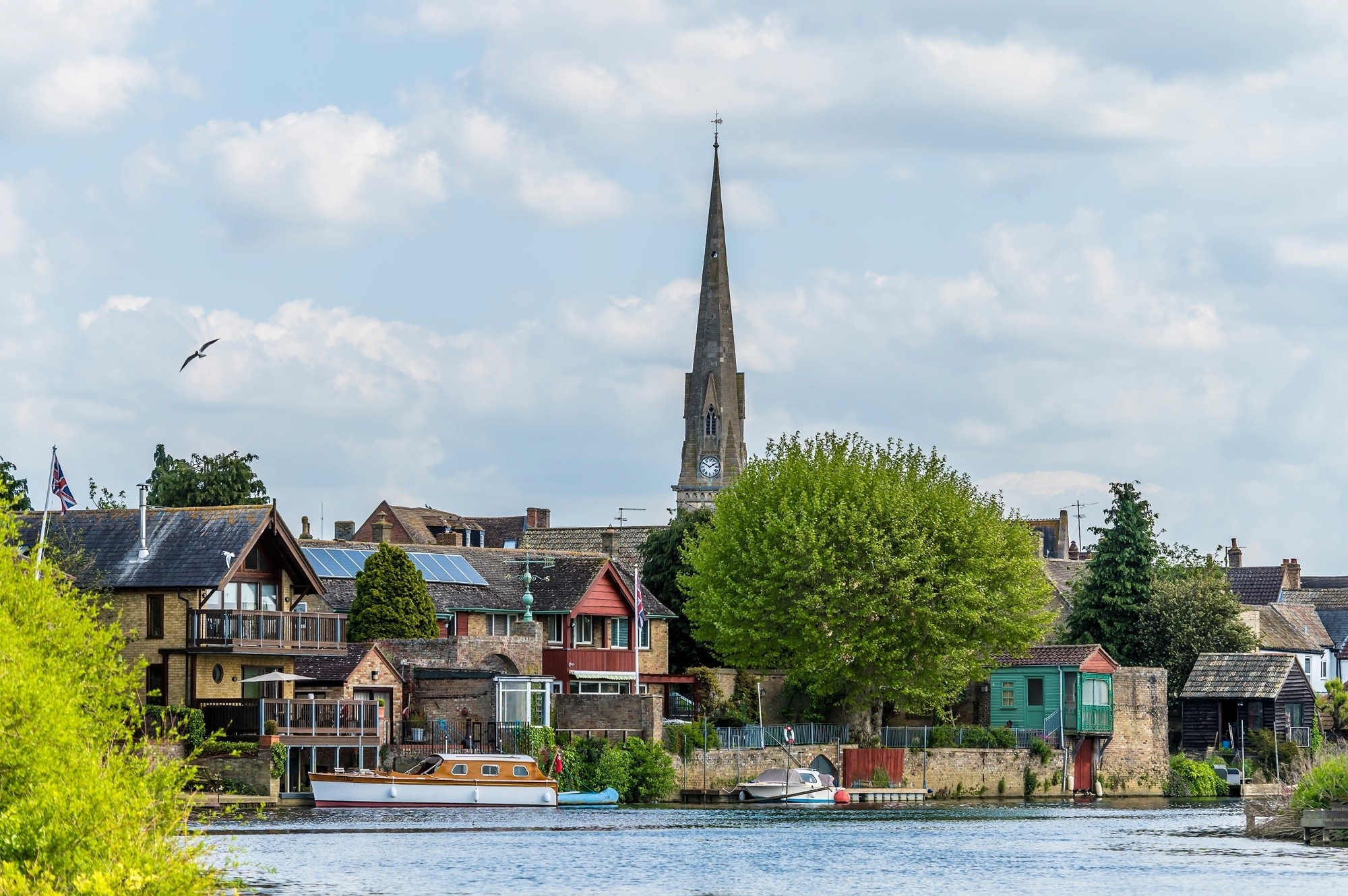
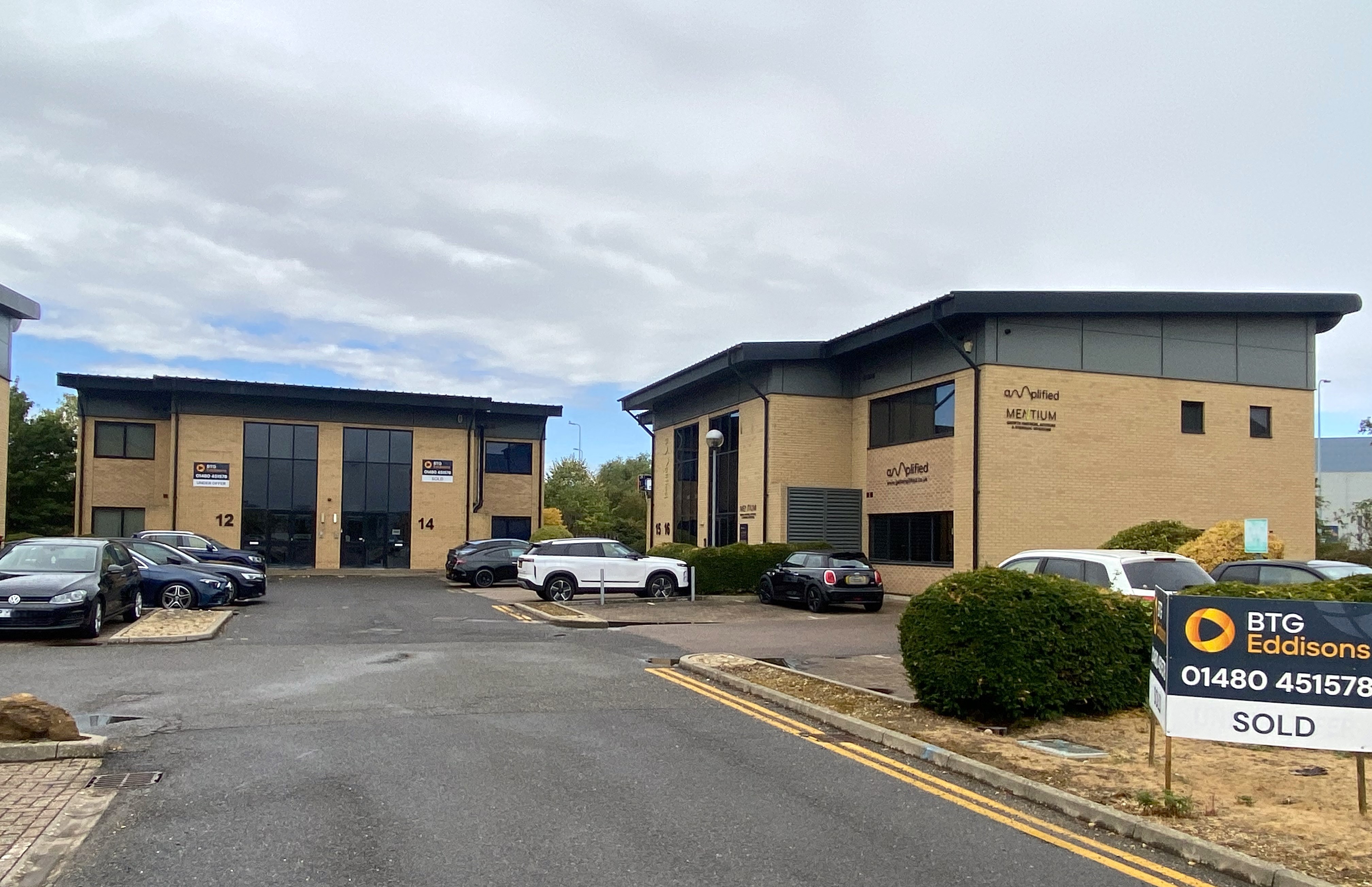 Of the three main towns, St Ives has seen the most notable effect of the A14 works with the ‘old road’ now providing a much less congested and, thereby, a quicker link to the edge of Cambridge. The Lakes Business Park is now almost fully complete while the Trinity Business Park - adjacent to the town’s established Somersham Road Industrial Estate - will offer future new commercial development opportunities including R&D, Mid-Tech and light industrial.
The squeeze in the office market in Cambridge is well documented and locations such as St Ives are offering office occupiers alternative opportunities, at significantly more affordable rates. For instance, Compass Point - which is close to the Guided Busway, offering a direct link into central Cambridge - see offices at significantly more affordable rates for occupiers who don’t need to be in the city centre or its science or research parks.
The new settlement of Alconbury Weald in the Huntingdonshire district has plans for over 6,500 homes across a range of home types and has a mixed-use modern development where over 1 million sq ft of commercial space has been built.
Alconbury Weald has seen the relocation of Cambridgeshire County Council’s headquarters from Shire Hall in Cambridge city centre and, among other high profile users, and is also the office HQ of Encocam, a multinational engineering and manufacturing company which was established in Huntingdon and retains four sites in the area from which it manufactures and distributes.
Accessibility allows Huntingdonshire to more effectively face both ways but gives it a complementary strength and appeal. The impact of the substantial road upgrading of the A14 and A428 cannot be overstated in presenting Huntingdon to new commercial opportunities and business audiences who want to access - not bypass - its renewed regional reach.
If you want to be part of the development of the Huntingdonshire scene, please get in touch with our team.
Get in touch with the BTG Eddisons team
Please contact us for more details and information.