

Project
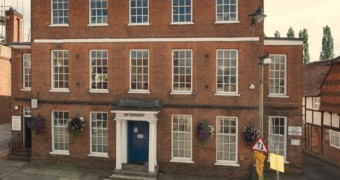
The former Barbican Hotel on St Mary’s Street Lincoln, is a Grade II Listed building of historical significance. Having been, largely, vacant for twenty years except for short term occupation - an Indian restaurant was one among other interim uses - it still retained its landmark status in being regarded with affection by Lincolnites.
It was selected by the University of Lincoln to be its new creative hub to cultivate the promotion of arts & culture in the city centre and be business destination for Lincoln’s creative industries, including fledgling companies and start-ups.
Approach
On appointment, Eddisons investigated various options for the property’s regeneration and refurbishment with the client - the building’s owner - Lincolnshire Co-op who are leasing the former hotel to the University who will operate and manage the building through a charitable subsidiary.
£2 million in capital funding for the renovation from various public and third sector sources, including from central government’s Town Deal, as well as significant capital investment from Lincolnshire Co-op was secured for the project.
In seeking to make best commercial use of the premises to meet the stated myriad end uses of the Barbican Creative Hub, we needed to scope out and ensure a design, a fit out and a build programme that complemented the fabric of the building and honoured its place in the historic city centre.
Eddisons’ multi-discipline project team worked with our client, the University team, London-based commercial interiors consultancy, 3=One Design with Lincoln-based experts, Framework Architects and Lindum Construction to achieve this in always being mindful of the budget, given the public spotlight on the project.
Results
At handover in February 2025, after the completion of the three year project from appointment, the University of Lincoln had its Barbican Creative Hub which it was preparing to launch later in the year.
The city of Lincoln’s vibrant arts & cultural life has a new focus in a revived and refreshed iconic building.
Public spaces include a gallery exhibition space and café where the domed ceiling rooflight is a particularly noteworthy feature. The creative industries have the opportunity for office and meeting spaces in which to collaborate and drive their businesses forward in the sector.
In fact, collaboration and drive were very much the watchwords for this successful project.
Get in touch with the BTG Eddisons team
Please contact us for more details and information.