


05/05/2026
Simon Parsons makes the case for the mid-box industrial market and why and how market shifts are bringing this slice of the commercial property sector out of the shadows and in front of the gaze of investor occupiers looking for a market set for growth, but that meets their operational needs now.
The undisputed star performer of the commercial property market over the past 15-20 years has been the industrial and logistics (I&L) market. While other sectors have fallen away, particularly during and post-Covid-19 pandemic eras, and never really recovered to their early millennium levels, nothing challenges our appetite for delivery to our doors. This hunger has fed supply chains to the point where the I&L market employs circa 4.5 million people and inputs £128 billion to the UK’s economy.
The big ‘sheds’ - warehouses larger than 100,000 sq ft - command our attention and, understandably to a lay audience, could be thought to dominate the I&L market in all respects. We all see them as we drive along any of the main road spines of the country’s network.
However, out of the 4.5 million employees in the I&L sector, 95 per cent work in sub-100,000 sq ft units - known as the small to mid-box market - current availability of premises in this market slice is less than 8 per cent.
It’s a market that is undersupplied and, over the past decade, we have seen rents increase here by circa 80 percent. The paucity of new development in this slice of the I&L market in the 10-year timeframe informs the view that there is pent-up demand for 60 million sq ft (source: Potter Space - Big Things in Small Boxes, February 2026).
Occupiers of such units are more likely to require the economic and environmental benefits as these companies tend to be less resilient in economic uncertainty. New-build units - with the benefit of modern construction and materials - offer them far more efficiencies when it comes to fixed costs.
Find commercial property
Regardless of your commercial property requirements, our team of experts are perfectly placed to help give you the right knowledge when you need it the most. Browse our available commercial property here.
If you cannot find what you are after or have any other queries, call 0800 051 2593 for tailored support.
Thus far, we are told that Government policy will build on the MEES regulations (statutory Minimum Energy Efficiency Standards for non-domestic properties) so that by April next year (2027), commercial premises will be required to have an EPC rating no less than ‘C’ and a ‘B’ rating in 2030.
Investors, developers and the wider market are looking at this potential policy and gearing up their portfolios to reflect this. In ramping up to a required ‘B’ rating for 2030, it is understood that new-builds can tick so many boxes. None more so than in a market which has the least activity likely to affect a wider demographic of occupiers, particularly in the small to mid-box market - given the position of most of its typical occupiers.
New development opportunities for I&L sites begin life at a planning policy level with the identification of sites carried out on a five-yearly basis by local planning authorities (LPAs).
The land review process has, and continues to, allocate land based on its defined use class, and not on its size or sub-sector. LPAs are often supported in their decision-making by lengthy employment land review reports that define supply and demand in detail, which would support a change in the allocation process.
However, to date, this has not happened. The result has been the mid-box market missing out on staking its claim for sites as part of land review processes. In turn, this has resulted in many years of weaker supply.
There is a need for LPAs to understand the specific role the small to mid-box market slice of the market plays in employment and future growth opportunities when it comes to identifying suitable sites for this type and scale of development. These can then sit alongside their land allocation for larger units. They are a complementary fit.
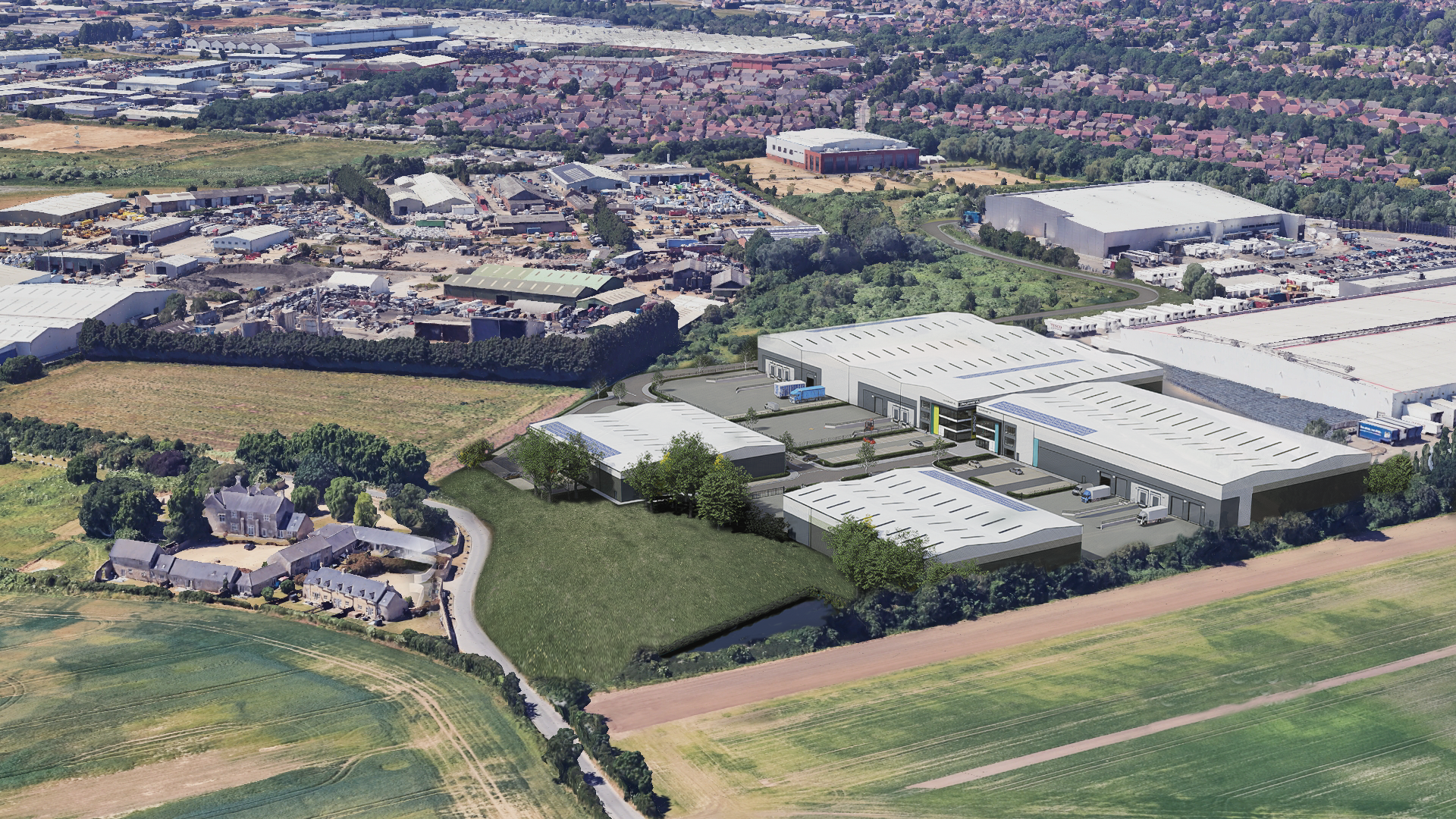
But things are changing. It may not be statutory policy-driven and more a response to market forces, but across the UK there are examples of strong cities and towns with a robust employment base that haven’t experienced mid-box developments within the past 30 years or more.
Peterborough and its growing sphere of influence, due to improved connectivity, is a prime example of such a location. It’s typical in being close to a local, mobile labour market and excellent connectivity to a significant road network including the A1 & A1(M), A14 and A47.
It’s a city that had an engineering legacy in its 20th-century expansion that has translated to a level of demand from manufacturing and light industrial businesses and a location that has attracted several national distribution and logistics occupiers. Larger scale development over the last ten years has driven the city’s commercial profile.
And it’s a city primed for mid-box development now.
While it has Peterborough Gateway big sheds, it’s accessible to and from the big shed landscapes of the East Midlands - that Golden Logistics Triangle arching over from the A14 to the West Midlands/M1 corridor to its west and the ports to its south east.
Land and development interests - and, of course, their professional property advisers - are working hard to make the mid-box case to the market to bring sites forward that offer opportunities. These are not the larger sites that are located on key motorway junctions but are situated on the edge of towns and cities.
It’s a market that is going to matter more and more given untapped demand and there’s a firm belief that its time is now.
BTG Eddisons has recently launched new mid-box opportunities in this area for developers and occupiers.
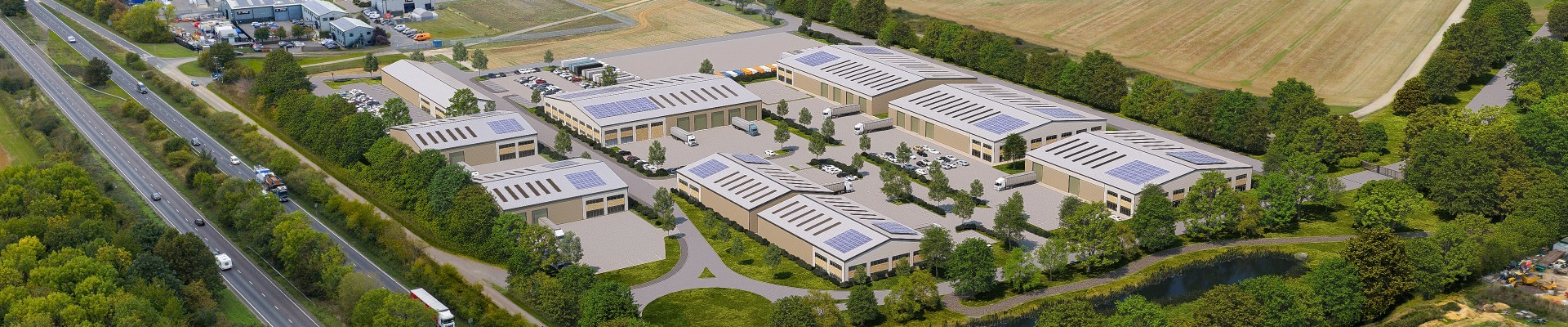
Quadrant Park on Staplee Way is within the city’s established Eastern Industry Area on a land site of 14.5 acres, with units from 27,7500 sq ft to 97,560 sq ft totalling 211,000 sq ft of unit space across the site.
To the north of the city, immediately off the A1, close to the Rutland and Lincolnshire market towns of Oakham and Stamford, respectively, is Woolfox Gateway that has just been launched to the market. Units here, from circa 20,000 sq ft to 150,000 sq ft, offer a scale-up from the rigid mid-box parameters at the largest end, but essentially it’s a textbook mid-box offer. It’s particularly being targeted at occupiers who are looking to be in-situ in their new buildings by summer 2028 and who are being encouraged to engage now.
This article is reproduced by kind permission of Business Weekly in which a version recently appeared as part of the publication’s monthly ‘Scaling up in association with BTG Eddisons’ feature'.
Get in touch with the BTG Eddisons team
Please contact us for more details and information.