

19/08/2026
Building consultancyBefore PAS 9980 existed, external wall fire risk was assessed against blanket government advice that treated almost any combustible material as unacceptable, regardless of context. That advice was withdrawn for being disproportionate. PAS 9980 replaced it with something more useful: a structured, risk-based methodology that looks at how a specific building's external wall actually behaves, rather than applying a one-size-fits-all rule.
This guide explains what PAS 9980 covers, what a Fire Risk Appraisal of External Walls (FRAEW) involves, and how it fits alongside the other fire safety obligations covered in this series.
What is PAS 9980?
PAS 9980:2022 is a code of practice published by the British Standards Institution, providing a methodology for assessing the fire risk posed by the external wall construction and cladding of existing multi-storey, multi-occupied residential buildings. It came into force in January 2022, replacing the government's Consolidated Advice Note, which had been widely criticised for treating risk in a disproportionate, one-dimensional way.
The assessment it describes is known as a Fire Risk Appraisal of External Walls, or FRAEW. Its purpose is to assess the risk to occupants from fire spreading over or within the external wall, and to reach a proportionate decision on whether remediation or other mitigating measures are actually necessary for that specific building.
What does a FRAEW under PAS 9980 actually involve?
A FRAEW assesses risk against a defined set of factors grouped under three broad headings, generally relating to the building's construction and materials, the fire safety measures already in place, and factors affecting evacuation and fire and rescue service access. In practice, assessors typically work through:
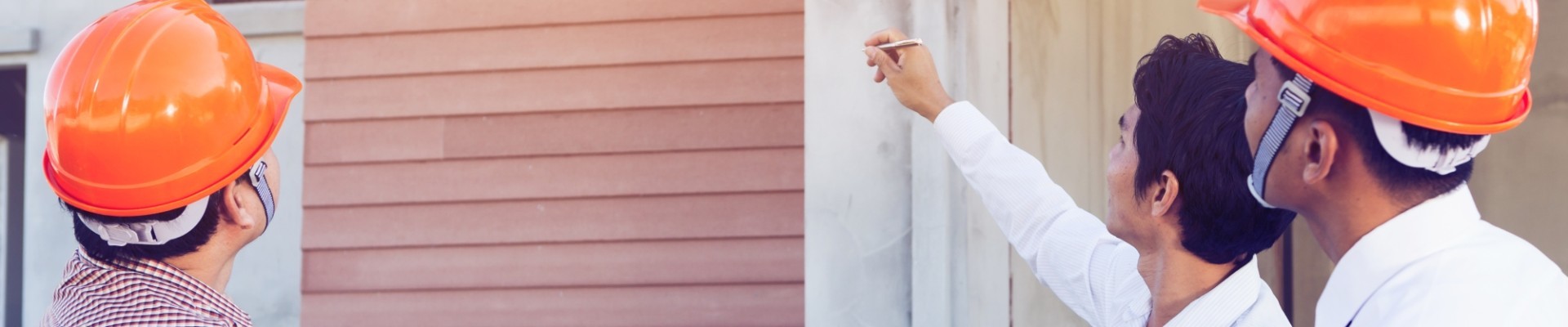
- An external examination of the wall system, checking cladding type and condition, evidence of compartmentation at floor and party wall junctions, and the condition of cavity barriers
- A review of construction records and drawings where available
- Intrusive investigation where the external evidence is insufficient to reach a reliable conclusion
- Scoring against the risk factors set out in the standard, to reach an overall risk rating for each wall system and for the building as a whole
Crucially, PAS 9980 explicitly allows for mitigation as an acceptable outcome. A FRAEW can conclude that a building does not require remediation of its external wall at all, provided the assessment demonstrates the overall risk is acceptable, which is precisely the more proportionate approach the standard was designed to enable.
Who can carry out a FRAEW?
PAS 9980 is intended to be used by competent fire engineers and other building professionals with the relevant expertise, and the standard itself sets out expected skillsets for an external wall assessor. Competence, not simply job title, is the deciding factor in whether an assessment will be accepted by lenders, insurers and the Building Safety Regulator.
How does PAS 9980 relate to EWS1 and fire risk assessments?
These three pieces fit together:
- A fire risk assessment (eddisons.com/insights/fire-risk-assessments-rrfso-explained) under the Regulatory Reform (Fire Safety) Order 2005 is the overarching legal duty for the building
- A FRAEW carried out under PAS 9980 is the specific methodology used where external wall risk needs detailed appraisal, and its outcome is intended to inform that wider fire risk assessment
- An EWS1 form (eddisons.com/insights/ews1-forms-explained) is simply the standardised way a FRAEW's outcome is communicated to a lender for valuation purposes
Treating any one of these as a substitute for the others is a common and avoidable mistake.
Is PAS 9980 changing?
The standard remains under ongoing review by a BSI panel, as is normal practice for a code of practice of this significance, though no confirmed revised version had been published at the time of writing. Anyone relying on an older FRAEW should check whether it was carried out against the current version of the standard.
Get expert guidance on a FRAEW for your building
If your building's external wall construction has not been formally appraised, or you have an existing assessment you are unsure still meets current expectations, our team can carry out a PAS 9980 FRAEW and advise on next steps.
Complete the form below and a member of our BTG Eddisons team will get back to you.
Get in touch with the BTG Eddisons team
Please contact us for more details and information.